

Hey folks! Every week, I dig up strange facts so you don’t have to. If you enjoy Hypertextual, tell a friend; that’s how good ideas travel. This week: mosquitoes that fancy beer drinkers, Baltic bombs turned into reefs, and other fascinating stuff.
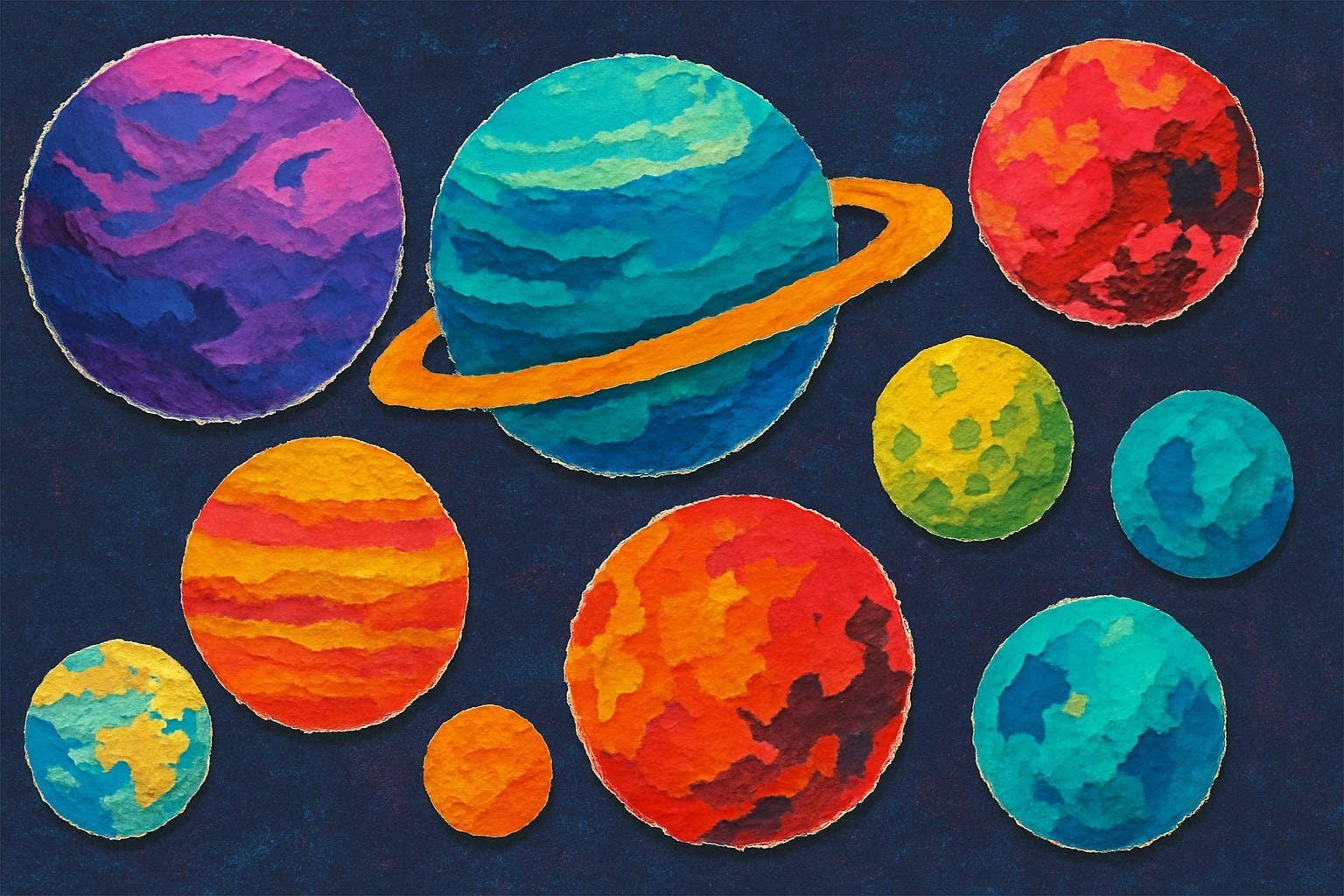
NASA has confirmed 6,000 exoplanets, with over 8,000 more waiting for verification. Some orbit two suns, some none at all, and others circle dead stars. A few are covered in lava or have clouds made of gemstones.
Investing in science pays off: every $1 the U.S. National Institutes of Health spends adds about $2.50 to the economy, and research outside defence can boost productivity by up to 300 per cent.
Of the 202 Nobel laureates in physics, chemistry, and medicine since 2000, about 30 per cent were born in a different country from the one where they won their prize.
Out of roughly 100,000 Chinese characters ever recorded, hundreds exist only on paper. No one knows how to pronounce them.
Beer drinkers attract mosquitoes 1.35 times more than non-drinkers. The insects also prefer people who shared a bed the night before, while showering or using sunscreen makes you less appealing to them.
15 per cent of the world’s working population uses AI.
More marine life thrives on World War II munitions dumped on the Baltic Sea floor than on the surrounding seabed.
A 2024 study of 1,715 mass killings worldwide found that only 105 — about 6 per cent — were committed by women.
“A growing number of scientists believe that the SARS-CoV-2 virus may be subtly altering our immune systems. If correct, their hypothesis will change how we understand everything from respiratory syncytial virus to shingles to sepsis.”
Antonio Stradivari built not only violins but also a few guitars — and one from 1679 still survives today. Listen to it here.
From my mailbox
Sam Matey-Coste interviews the co-founder of a nonprofit platform enabling zero-interest loans for solar projects in the Global South.
Alexander Verbeek writes about America’s self-inflicted tourism collapse.
Hannah Ritchie explains why eliminating contrails from flying could be incredibly cheap.
What I’ve been reading
How did hands evolve? The answer is behind you: “The evolutionary blueprint for hands was borrowed in part from a much older genetic plan for two openings in ancient fish: the anus, and a hole for the bladder and for sexual organs.”
How to live a good life in difficult times: “Homo sapiens is by far the most intelligent species on the planet, and it simultaneously is the most deluded species: humans believe the kind of nonsense that no chimpanzee or elephant or rat would ever believe. We are now creating a superintelligence, and there is every reason to think that it will be super deluded.”
Barcelona is made of math: “Mathematics, it seems, is anywhere you choose to find it — in architecture, but also in music, the flow of traffic and bowling. It’s all around us. It transcends borders, countries, cultures and even eras.”
And that’s it for today! Thanks for reading! If you enjoy the newsletter, share it with a friend. And if you really enjoyed it, consider upgrading to a paid subscription: it helps support my work and means a lot.
Elia Kabanov is a science writer covering the past, present and future of technology (@metkere)
Cover art: Elia Kabanov feat. DALL-E.