

Digital journalism rarely asks us to listen. Podcasts aside, most stories are made of text, photos, maps, charts and video. So I started collecting examples where sound becomes illustration, reporting material and even data.
Start with a play button
Perhaps the simplest approach is to embed an audio player between paragraphs. In a recent The Guardian piece, readers can listen to a fish under a frozen lake or insects communicating through plant stems.

Similarly, The New York Times brought together recordings from researchers in the Amazon, the Arctic Ocean and the Swiss glacier, where one sound artist has spent more than a decade recording cracking ice.
These projects may look a bit old-school, but they work because you can hear what the story describes.
Build the story around sound
Sometimes you don’t need to go to the Arctic to make a great sound feature. In another Times piece, microphones pick up fish and aquatic snails in a Central Park pond, vibrations through tree roots, Brooklyn Bridge and a hot-dog cart. Each recording is paired with photographs or video showing where it was made.
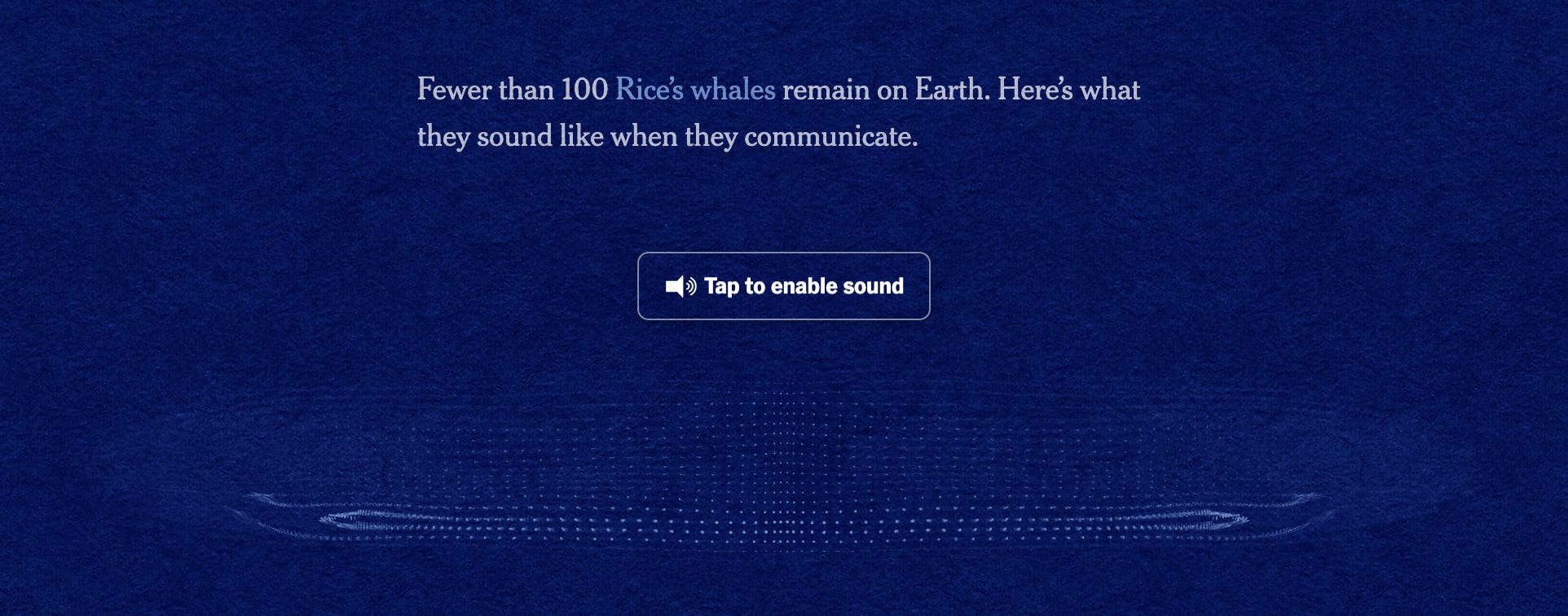
My favourite example, and the one that inspired this issue, comes from the New York Times again. It combines maps of the Gulf of Mexico with recordings of endangered whales and seismic blasts. Hearing both makes the scale of the problem much more evident.
Treat sound as data
According to The Pudding, cats do not say “meow” in every language. The project compares animal sounds across 21 languages by converting words into the International Phonetic Alphabet and splitting them into individual sounds. The recordings let you check what those words actually sound like.
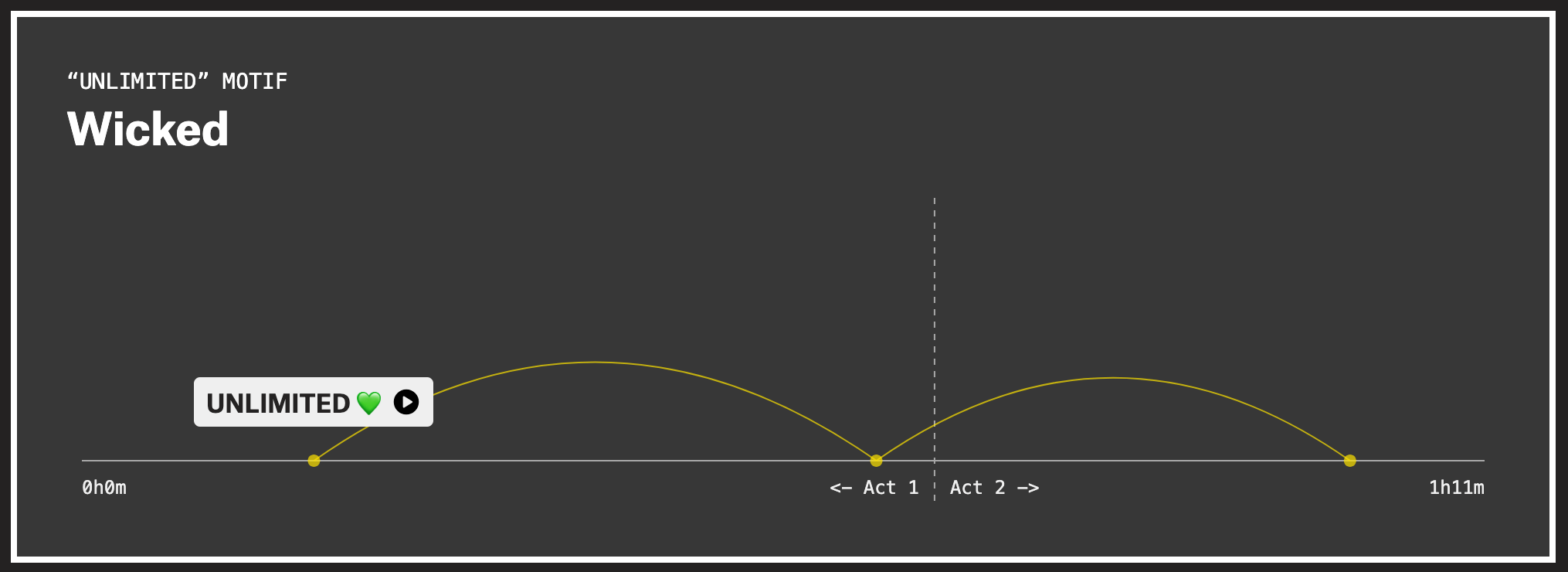
Finally, Common Threads tracks recurring musical motifs in Wicked, Hamilton and Les Misérables. It shows where each melody returns during the musical and lets you hear the corresponding passages.
Previously on Hypertextual: How 3D is changing the way we see stories.
Thanks for reading! If you enjoy the newsletter, share it with a friend or ten. And if you really enjoyed it, consider upgrading to a paid subscription to support my work.
Elia Kabanov is a London-based science writer exploring technology, cities, nature and history (@metkere).
Cover art: Elia Kabanov feat. DALL-E.